
What helps a blended family come together
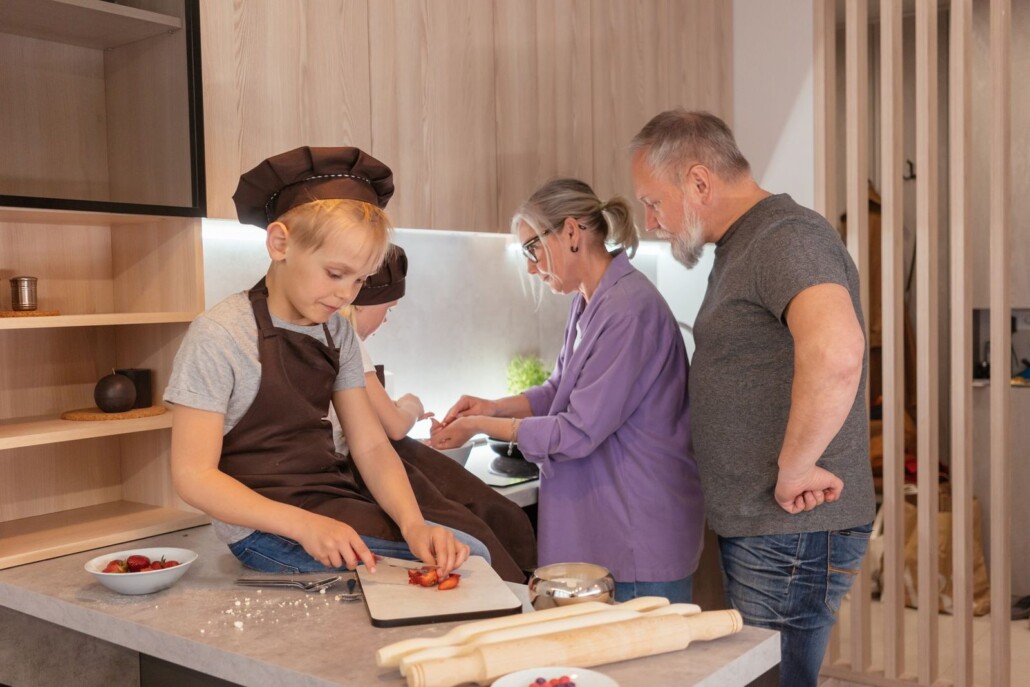
A blended family is a family that includes a stepparent, stepsiblings or half siblings. In 2023, 17% of U.S. children lived in one, according to the Pew Research Center. The American Academy of Child and Adolescent Psychiatry (AACAP) notes it may take several years for a blended family to fully adjust. Pacing the changes, letting stepparent relationships build slowly and making room for children’s ties to their other parent are practical places to start.
This is for you if you’re remarrying, moving in with a partner who has children, or already a few years into stepfamily life. The bond you have with your partner doesn’t come with a ready-made bond with their children, or yours with theirs. Building those relationships takes time, and the research below is a useful guide to where to put your effort.
How common are blended families?
Pew Research Center’s April 2026 analysis of Census Bureau data found that 17% of U.S. children under 18 live in a blended family. Nearly half of those children (46%) live with a parent and a stepparent, and half (50%) live with at least one half sibling but no stepparent. Teens ages 13 to 17 are the age group most likely to live in a blended family, at 22%.
“Stepfamily” usually means a family with a stepparent. “Blended family” covers that and more, including households where children live with half siblings but no stepparent. Whatever words you use at home, let your children’s language lead.
Why does a blended family take time?
Your family starts with relationships that have different histories. You and your children share years of routines, jokes and hard times, while your partner and your children may have only months. A 2018 review of 20 qualitative studies described a tension many stepfamilies live with: wanting to feel like a first-time family while also noticing the ways their family is different.
The same review found that stepfamilies build a shared identity through three kinds of family work: honoring the past, marking the present and investing in the future. If you keep that in mind, you can take some pressure off yourselves. Your family doesn’t have to feel finished in the first year.
How can you pace the changes?
Your children may have lived through big changes already, sometimes several. You can’t avoid every change, but you can space them out and explain them ahead of time.
The American Academy of Pediatrics’ guidance on what children experience when a parent remarries notes that routines, chores and privacy are likely to change when households combine. It suggests having the children of both families get together to get to know each other for an event or two. For your family, that could look like:
- Several casual meetings, such as a park, a pizza night or a hike, before a wedding or a move.
- Telling your children about a move-in or a room change weeks ahead, along with what stays the same.
- Giving each child some space of their own, even a shelf or a drawer in a shared room.
- Keeping one or two routines exactly as they were, such as your bedtime story or your Saturday breakfast together.
How can a stepparent build a relationship with stepchildren?
If you’re the stepparent, start with connection before rules. A 2019 study of 234 stepcouples looked at “affinity-seeking,” the everyday ways a stepfather tries to build a friendly connection with a stepchild. Stepfathers who did more of it had less conflict with their stepchildren, and both partners reported better marriages and a closer stepfamily.
In your week, affinity-seeking looks like this:
- Spend one-on-one time with each child around something they already enjoy, like a sport, a show or a video game.
- Ask about their day and remember the answers next time.
- Show up for the events that matter to them without needing to be the center of attention.
- Let each child set the pace for hugs, nicknames and closeness.
Talk with your partner early about who handles discipline at first, and plan to share it more as trust builds. Our gentle parenting guide has ideas for setting limits warmly that both of you can use.
How can you help a child who feels torn between parents?
Your child may worry that liking a stepparent is unfair to their other parent. The AAP describes this directly: children can feel that showing love toward a new stepparent means disrespecting their mom or dad. It also notes that children can’t settle that worry on their own while the adults are still in conflict. Where possible, the AAP suggests the other parent and the stepparent make contact, and says the more comfortable those two become with each other, the more reassured the child will feel.
You can help by saying it out loud. As the parent, you might say: “You can like your stepdad and love your dad. Nobody is replacing anybody.” As the stepparent, you might say: “I’m not here to take your mom’s place. I’d like us to get to know each other.” Expect your child to compare a stepparent with their other parent; the AAP treats those comparisons as a normal part of adjusting.
Build traditions that belong to your new family
Honoring the past and marking the present are practical steps. Keep some traditions from each household, and create a few new ones that belong to your family. A weekly game night, a new holiday recipe or an annual trip becomes something everyone shares from the start.
Invite your children to help choose a new ritual, so they have a say in the change. You might ask them: “We want to start one new tradition this year. What would you pick?” If your two households practice faith or holidays differently, name that plainly and let your children take part in both.
Holidays in a blended family
Holidays bring schedules, extended family and old traditions together all at once. Try a shared calendar that everyone can see, agreed on well in advance with the other household. Two celebrations on different days can work well, and sharing the plan with your children early helps them know what to expect.
Protect your relationship as a couple
Set aside regular time as a couple, and talk through parenting decisions in private before you present them together.
You and your partner don’t have to agree on every parenting question. Start by agreeing on a few house rules that apply to every child in your home, and present them together.
When family therapy can help
Some families come to therapy before they combine households, to plan ahead. Others come when a child’s behavior changes, when a stepparent and stepchild are stuck in conflict, or when you and your partner keep having the same argument. The AAP recommends professional support if a child has persistent trouble adjusting.
Family therapy gives everyone a place to be heard, including your children, and couples therapy can help you and your partner get on the same page about parenting. Mountain View Family Therapy sees families and couples at its Riverton office, children and teens in Riverton and Draper, and everyone by video anywhere in Utah. The practice is in network with plans including Select Health, PEHP, DMBA and University of Utah Health Plans, and also works with Clergy Pay. You can see the full list of services, and if your family is still in the middle of a separation, our guide on how to talk to kids about divorce may help too.
Frequently asked questions
What is a blended family?
It’s a family with at least one stepparent, stepsibling or half sibling. By Pew Research Center’s count, about one in six U.S. children lived in one in 2023. Of those children, 46% lived with a parent and a stepparent, and 50% lived with a half sibling but no stepparent.
How long does it take for a blended family to adjust?
Often several years. AACAP, the national academy of child psychiatrists, notes it may take several years for blended families to fully adjust, and the AAP says most children adjust to their new family with time. Relationships with younger children tend to develop more quickly than with older ones.
Should a stepparent discipline stepchildren?
Ease into it, and decide together. In a 2019 study, stepfathers who worked on a friendly connection with stepchildren had less conflict with them, so connection first gives discipline more footing. Treat a parent-led arrangement as temporary, since lasting one-sided discipline is among the signs a family may need help.
When should a blended family see a therapist?
Consider it if problems last. AACAP, the national academy of child psychiatrists, suggests an evaluation when signs persist. Its examples include a child directing anger at one family member or openly resenting a stepparent or parent. They also include a parent under great stress, a parent openly favoring one child, discipline left only to the parent, and frequent crying or withdrawal.
Room for every family to grow
Every blended family comes together at its own pace. If you’d like support, you can call or text the client care coordinator at (801) 930-0411 or read how getting started works. We hope your family finds its own way of fitting together.
Sources
- Pew Research Center, 5 facts about U.S. children living in blended families (April 21, 2026)
- American Academy of Pediatrics, HealthyChildren.org: What Your Child is Experiencing When You Remarry
- Ganong L, Jensen T, Sanner C, Russell L, Coleman M. Stepfathers’ affinity-seeking with stepchildren, stepfather-stepchild relationship quality, marital quality, and stepfamily cohesion among stepfathers and mothers. Journal of Family Psychology, 2019
- Pylyser C, Buysse A, Loeys T. Stepfamilies doing family: a meta-ethnography. Family Process, 2018
- American Academy of Child and Adolescent Psychiatry, Stepfamily Problems (Facts for Families No. 27)
This article is for general information and isn’t a substitute for professional advice. If anyone in your home is not safe, call 911. For a mental health crisis, call or text 988 (Suicide & Crisis Lifeline).
